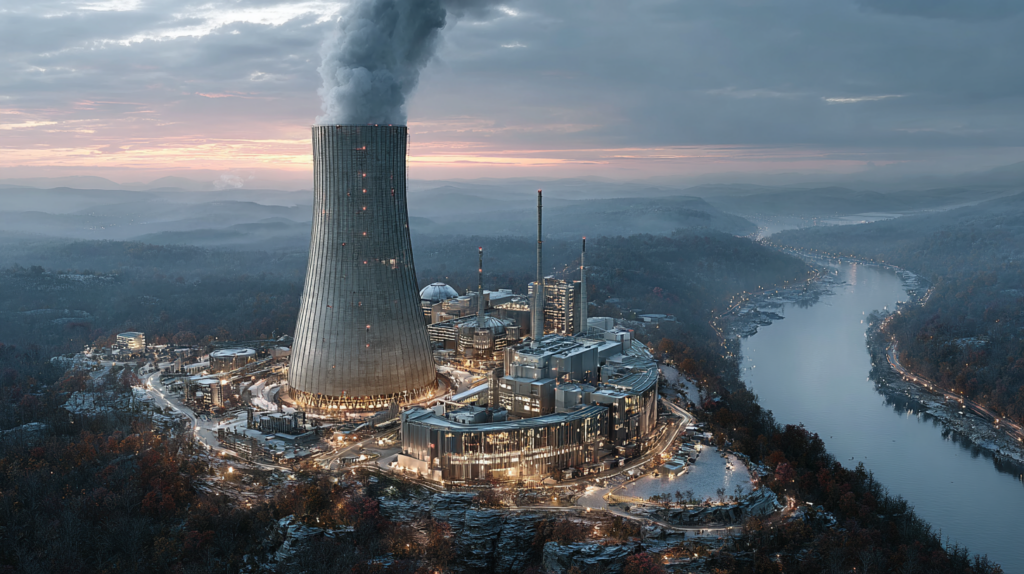
ⓒ 2026 Rich & Rich Aerial view of a clean and futuristic Small Modular Reactor (SMR) power plant by a river.
1. The “Invisible Wall”: The Reality of the AI Power Shock
If Nvidia’s GPUs are the “picks and shovels” of the AI gold rush, the electricity required to run them is the lifeblood of the entire operation. While the market cheers for the latest generative AI breakthroughs, seasoned investors are beginning to pivot toward the physical bottleneck: energy. A single ChatGPT query consumes roughly ten times the power of a standard Google search, and training next-generation Large Language Models (LLMs) requires the annual energy output of a mid-sized city.
By 2030, global data center power demand is projected to triple. This isn’t a problem we can solve by simply building more power plants. The “highways” of our energy system—the power grids—are currently insufficient to carry this massive load to the data centers that need it most. The success of the AI revolution no longer rests solely on software; it is now in the hands of physical power infrastructure.
2. SMRs: The Tech Giants’ Quest for Energy Sovereignty
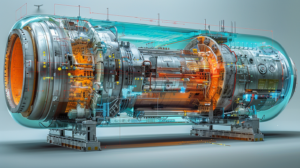
Traditional nuclear plants take over a decade to build and require massive grid connectivity. Small Modular Reactors (SMRs) are changing the game. Built in factories and assembled on-site, SMRs offer the flexibility to be placed directly adjacent to data centers.
- Localization: By generating power on-site, SMRs bypass the need for expensive long-distance transmission lines, minimizing energy loss.
- Zero-Carbon Base Load: Unlike solar or wind, which are intermittent, SMRs provide 24/7 “always-on” power, which is essential for hyperscale data centers aiming for “RE100” carbon neutrality goals.
- The Big Tech Bet: Amazon’s acquisition of the Talen Energy nuclear-powered data center and Microsoft’s deal to restart Three Mile Island are just the beginning. Google is also aggressively partnering with SMR innovators like NuScale Power to secure its own energy supply chain.
3. The Infrastructure Veins: The Return of the Copper Super-Cycle
If the SMR is the engine, copper is the nervous system. The modernization of power grids and the construction of AI hubs require unprecedented amounts of copper—the gold standard for electrical conductivity.
| Factor | Investment Outlook |
| Supply Inelasticity | Developing a new copper mine takes 10 to 15 years due to environmental regulations and exploration timelines. |
| The New Oil | With the dual demand from EVs and AI infrastructure, copper has transitioned from a mere commodity to a “strategic national resource.” |
| Super-Cycle Entry | Depleting reserves in existing mines and exploding demand mean we are entering a multi-year price uptrend. |
4. The Heart of the Grid: Transformers and Software
Power isn’t just about generation; it’s about management. High-voltage electricity from a plant must be safely stepped down by transformers before a data center can use it.
In the United States, over 70% of the grid infrastructure is more than 25 years old. The convergence of this aging infrastructure with the AI demand spike has created a perfect storm.
- Transformer Shortage: Lead times for new transformers have tripled. We are in a “seller’s market” where supply cannot keep pace with demand.
- Smart Grid Software: AI is being used to manage the grid itself. Software that can predict loads and distribute power efficiently is becoming a high-margin, essential technology for modern utility companies.
5. The New Paradigm: Energy = Computing Power
In the industrial age, coal and oil were the primary drivers of growth. In the AI age, that driver is electricity. Capital markets are shifting their valuation models: it’s no longer just about who has the smartest algorithm, but who has secured the cheapest, most stable power supply at scale.
Energy infrastructure possesses a massive “Moat.” No software company can build a power grid or a nuclear facility overnight. Those who own these physical assets will hold a position of power similar to the OPEC nations of the 20th century.
6. Strategy for the Century: Own the Roads
Focusing on the volatility of individual tech stocks is a short-term game. True generational wealth—the hallmark of the Rich & Rich philosophy—is built on owning the “foundational architecture” of the era.
Energy infrastructure is a defensive, high-barrier asset class that generates stable cash flow for decades. Own the “roads” that Nvidia travels on. By positioning yourself in the power grid, SMR technology, and the copper supply chain, you are securing the final approval rights for the AI revolution.